النصب التذكاري للحرب في سيول - كوريا الجنوبية
جريدة صيدونيانيوز.نت / HWPL: From the War Memorial to Gyeongbokgung Palace: World Youth Discover the "Value of Peace" in Seoul
Sidonianews.net
Lebanon
22-9-2026
From the War Memorial to Gyeongbokgung Palace… World Youth Discover the "Value of Peace" in Seoul
Reinterpreting the Meaning of Peace and Coexistence Through Cultural Heritage, Extending into Community Peace Activities Across the Globe
Youth from 43 countries gathered in Seoul. This international youth exchange program invites participants to visit Korea's historical and cultural heritage sites, places that hold the history of the Korean War and the division of North and South Korea, to learn the values of peace, coexistence, and mutual understanding. From the War Memorial of Korea, which holds the memories of war and division, to Insadong, Gwanghwamun, and Gyeongbokgung Palace, spaces familiar to Koreans are becoming classrooms where young people from around the world learn about peace.
Heavenly Culture, World Peace, Restoration of Light (HWPL), an organization in Special Consultative Status with the UN Economic and Social Council (ECOSOC), held the "HWPL International Youth Peace Program" over three days, from September 17 to 19.
Held under the theme "We, the Living Legacy of Peace," the program consists of three stages: Discover, Learn, and Act. The goal is for participants to put into practice, within their own communities, the values of peace they discover and learn in Korea.
On the first day, September 17, participants toured the War Memorial of Korea, including the Korean War Room, the UN Room, the UN Monument, and the Statue of Brothers, reflecting on the wounds that war left on individuals, families, and the youth generation. Organizers asked participants, "What does peace mean to me, and what can I do to protect it?" It was a moment to reconsider that while past generations of young people bore the sacrifices of war, today's youth can become the ones who actively build peace.
Mrs. Laisani sepo, Chairwoman of the National Youth Council of Fiji (NYCF), said after visiting the War Memorial, “The young ones were trying to protect their areas and willing to give up their lives even though they saw the risk, the death in front of them. It takes strong willpower to keep moving forward despite the challenges and criticism we may face in building peace.”
At Insadong, participants explored traditional Korean culture firsthand, experiencing how "understanding" an unfamiliar culture leads to "respect," which acknowledges each other's differences, and how that respect in turn leads to "exchange" between people.
Mr. Alwand Talaat Jawhar Caluri, Program Director of Public Aid Organization from Iraq, said, “It is important to provide a safe and inclusive space where young people from around the world and from different religious backgrounds can share their thoughts and concerns about peace.” He added, “This kind of gathering can serve as a platform for exchanging best practices and learning from one another, allowing young people to benefit from each other’s experiences.”
At Gwanghwamun and Gyeongbokgung Palace, participants explored the meaning of peace through five keywords: Inheritance, Respect, Responsibility, Change, and Harmony. In particular, through the examples of King Sejong the Great, the Hall of Worthies (Jiphyeonjeon), and the creation of Hangeul (Hunminjeongeum), they examined how a leader's choices and learning can bring about change for society and future generations. Participants each chose one of the five values they wanted to put into practice and recorded, in their own words, what actions they would take upon returning home.
Mr. Andrew Junior Mwima, Chief Executive Officer (CEO) of Mental Health and Anti-Drug Abuse Organisation, stated, “Young people are the ones sent to war. It means the young people can be the ones leading peace initiatives on the front lines.” He added, “Youths are not the future leaders. We are the leaders of today.” emphasizing that young people should take a leading role in peace initiatives and community development.
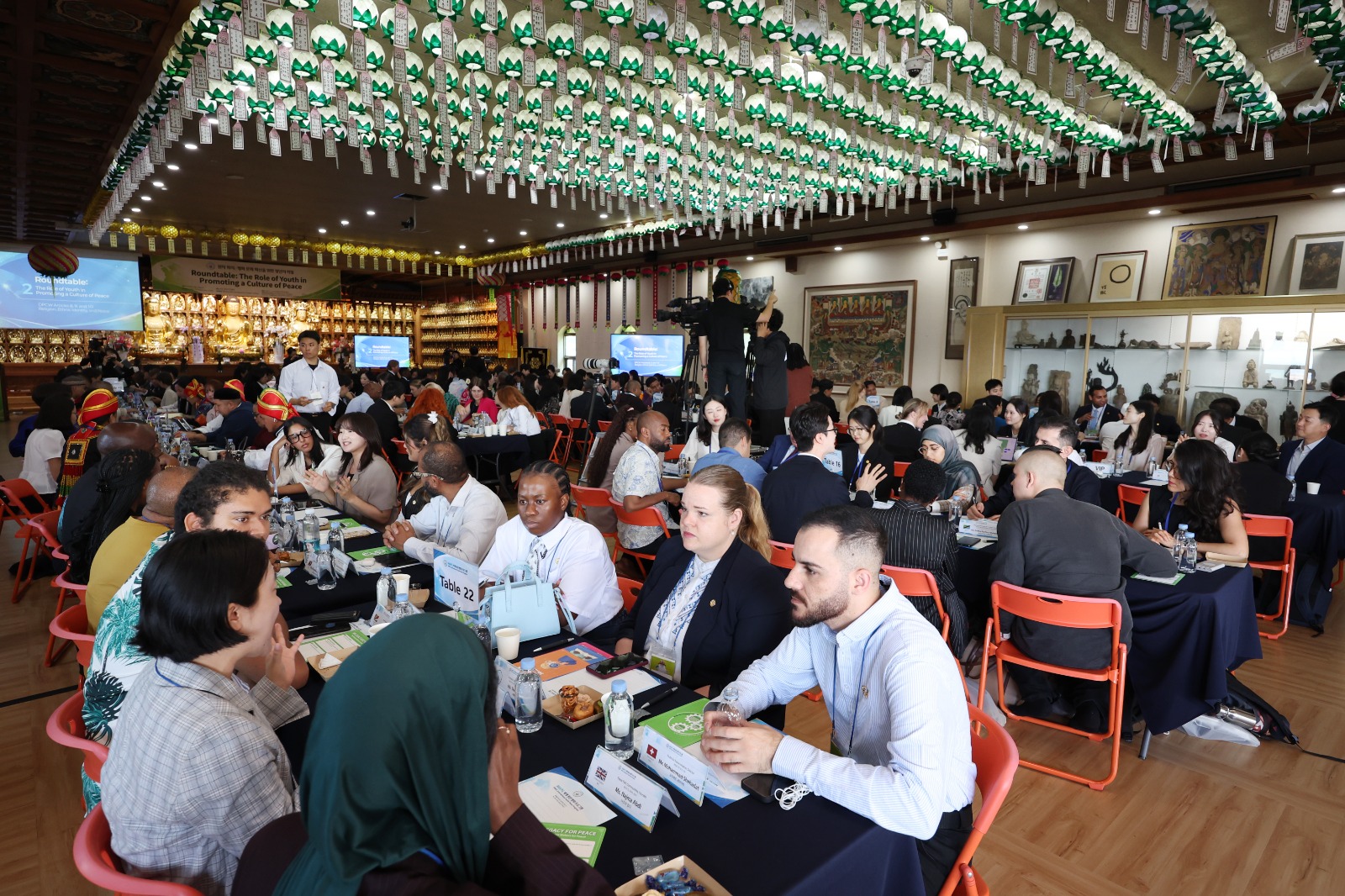
The "Discover" phase of the 17th led into the "Learn" phase on the 18th. The roundtable discussion held that day was themed "The Role of Youth in Spreading a Culture of Peace." The discussion was designed to help young people first understand and learn how to prevent religious beliefs and ethnic identities from being used as pretexts for violence and conflict, based on Articles 8, 9, and 10 of the Declaration of Peace and Cessation of War (DPCW). Articles 8, 9, and 10 of the DPCW set out principles on preventing war, resolving conflict, promoting peace among religions and ethnic groups, and spreading a culture of peace. This was followed by the "International Religious Peace Academy for Youth Leaders," where participants examined the scriptures and teachings of Buddhism, Confucianism, Christianity, Islam, and Hinduism to broaden their understanding of different cultures and religions.
The "Learn" phase of the 18th led into "Act," the final phase, on the 19th, the day the values discovered and learned earlier are put into actual practice. Participants shared regional activity case studies from the Youth Engagement & Peacebuilding Working Group(YEPW), where young people plan and carry out their own peace activities. Building on this, they discussed implementation strategies for regional YEPW projects and further developed their 2027 action plans and individual roles.
This program is structured as a three-day journey in which participants discover the necessity of peace through the memory of war, learn understanding and respect through different cultures, and connect the choices and responsibilities found in history to practical action today.
HWPL Secretary-General Kang Tae-ho said, "Youth from around the world directly encountered the necessity of peace on this land of war and division." He added, "Peace is not a legacy we inherit, but a legacy we must pass on to future generations forever. Youth peace leaders are the ones who must carry that forward. I hope participants will take the answers they found in Korea and turn them into action in their own countries."
Ms. Sarah Vermaut, a law student at the Free University of Brussels (VUB) in Belgium, said, “I am just a student. Why would they listen to me? But if we think like that, we cannot change anything.” She added that she wants to share what she has learned with her peers and organize activities that other young people can take part in.
-------------
Sidonianews.net
جريدة صيدونيانيوز.نت
--------------
من النصب التذكاري للحرب الكورية إلى قصر غيونغبوكغونغ... شباب العالم يكتشفون «قيمة السلام» في سيول.
إعادة فهم مفهومَي السلام والتعايش من خلال التراث الثقافي، وامتداد ذلك إلى أنشطة السلام المجتمعية حول العالم
اجتمع شباب من 43 دولة في سيول. ويدعو برنامج التبادل الشبابي الدولي هذا المشاركين إلى زيارة المواقع التي تمثل التراث التاريخي والثقافي لكوريا، والأماكن التي تحمل في طياتها تاريخ الحرب الكورية وانقسام الكوريتين إلى شمال وجنوب، للتعرف على قيم السلام والتعايش والتفاهم المتبادل. فمن النصب التذكاري للحرب الكورية، الذي يحتفظ بذكريات الحرب والانقسام، إلى إنسادونغ وغوانغهوامون وقصر غيونغبوكغونغ، تتحول الأماكن المألوفة لدى الكوريين إلى فصول دراسية يتعلم فيها الشباب من مختلف أنحاء العالم عن السلام.
ستنظم منظمة ’الثقافة السماوية، السلام العالمي، وإحياء النور (HWPL)‘، وهي منظمة تتمتع بوضع استشاري خاص لدى المجلس الاقتصادي والاجتماعي التابع للأمم المتحدة (ECOSOC)، "برنامج HWPL الدولي لسلام الشباب" على مدار ثلاثة أيام، وذلك في الفترة من 17 إلى 19 سبتمبر.
يُقام البرنامج تحت شعار "نحن الإرث الحي للسلام"، ويتألف من ثلاث مراحل: ’الاكتشاف، والتعلم، والعمل‘. ويهدف البرنامج إلى تمكين المشاركين من تطبيق قيم السلام، التي يكتشفونها ويتعلمونها في كوريا، على أرض الواقع داخل مجتمعاتهم.
في اليوم الأول، 17 سبتمبر، زار المشاركون النصب التذكاري للحرب الكورية، بما في ذلك قاعة الحرب الكورية وقاعة الأمم المتحدة ونصب الأمم المتحدة وتمثال الأخوين، مستذكرين الجراح التي خلفتها الحرب الكورية وانقسام البلاد في نفوس الأفراد والأسر وجيل الشباب. وطرح المنظمون على المشاركين السؤال التالي: "ماذا يعني السلام بالنسبة لي، وما الذي يمكنني فعله لحمايته؟" وكانت تلك لحظة لإعادة التفكير في أن الأجيال الشابة في الماضي تحملت تضحيات الحرب، في حين يمكن لشباب اليوم أن يصبحوا من يسهمون بفاعلية في بناء السلام.
وقالت السيدة لايساني سيبو، رئيسة المجلس الوطني للشباب في فيجي (NYCF)، عقب زيارتها للنصب التذكاري للحرب: "كان الشباب يحاولون حماية مناطقهم، وكانوا مستعدين للتضحية بحياتهم رغم إدراكهم للمخاطر ورؤيتهم الموت أمام أعينهم. ويتطلب مواصلة المضي قدمًا رغم التحديات والانتقادات التي قد نواجهها في مسيرة بناء السلام إرادةً قوية."
وفي إنسادونغ، تعرّف المشاركون بشكل مباشر على الثقافة الكورية التقليدية، واختبروا كيف يقود "فهم" ثقافة غير مألوفة إلى "الاحترام" الذي يقرّ باختلافات بعضهم عن بعض، وكيف يقود هذا الاحترام بدوره إلى "التبادل" بين الناس.
وقال السيد ألوند طلعت جوهر كالوري، مدير البرامج في منظمة المساعدات العامة من العراق: "من المهم توفير بيئة آمنة وشاملة تتيح للشباب من مختلف أنحاء العالم ومن خلفيات دينية متنوعة تبادل أفكارهم ومخاوفهم بشأن السلام." وأضاف: "يمكن لمثل هذه التجمعات أن تشكل منصة لتبادل أفضل الممارسات والتعلم من بعضنا البعض، بما يتيح للشباب الاستفادة من تجارب بعضهم البعض."
وفي غوانغهوامون وقصر غيونغبوكغونغ، استكشف المشاركون معنى السلام من خلال خمسة مفاهيم رئيسية هي: الإرث، والاحترام، والمسؤولية، والتغيير، والانسجام. وعلى وجه الخصوص، ومن خلال أمثلة الملك سيجونغ العظيم وقاعة العلماء «جيبهيونجيون» وإنشاء الهانغول «هونمينجيونغأوم»، بحثوا في كيفية إسهام خيارات القائد وما يتعلمه في إحداث تغيير في المجتمع ولدى الأجيال القادمة. واختار كل مشارك إحدى القيم الخمس التي أراد تطبيقها عملياً، وسجّل بكلماته الخاصة الإجراءات التي سيتخذها عند عودته إلى بلده.
وقال السيد أندرو جونيور مويما، الرئيس التنفيذي لمنظمة الصحة النفسية ومكافحة تعاطي المخدرات: "الشباب هم من يُرسلون إلى الحروب. وهذا يعني أنهم قادرون أيضًا على قيادة مبادرات السلام في الخطوط الأمامية." وأضاف: "الشباب ليسوا قادة المستقبل، بل نحن قادة اليوم"، مؤكدًا ضرورة اضطلاع الشباب بدور قيادي في مبادرات السلام وتنمية المجتمعات المحلية.
تنتقل مرحلة "الاكتشاف" في اليوم السابع عشر إلى مرحلة "التعلّم" في اليوم الثامن عشر. وتحمل جلسة النقاش المستديرة التي تُعقد في ذلك اليوم عنوان "دور الشباب في نشر ثقافة السلام". ويناقش المشاركون الهوية الدينية والعرقية والسلام، استناداً إلى المواد 8 و9 و10 من وثيقة السلام ووقف الحرب (DPCW)، وهي مواد تضع مبادئ لمنع الحروب وحل النزاعات وتحقيق السلام بين الأديان والأعراق ونشر ثقافة السلام. ويعقب ذلك "الأكاديمية الدولية للسلام الديني للشباب القادة"، حيث يتعمق المشاركون في دراسة النصوص المقدسة وتعاليم البوذية والكونفوشيوسية والمسيحية والإسلام والهندوسية، بهدف توسيع فهمهم للثقافات والأديان المختلفة.
تنتقل مرحلة "التعلّم" في اليوم الثامن عشر إلى مرحلة "العمل"، وهي المرحلة الأخيرة، في اليوم التاسع عشر، وهو اليوم الذي تُطبَّق فيه عملياً القيم التي اكتشفها المشاركون وتعلّموها في المراحل السابقة. وسيشارك المشاركون دراسات حالة حول أنشطة إقليمية من مجموعة عمل إشراك الشباب وبناء السلام (YEPW)، حيث يخطط الشباب لأنشطة السلام وينفذونها بأنفسهم. واستناداً إلى ذلك، سيناقشون استراتيجيات تنفيذ مشاريع السلام الخاصة بكل دولة، كما سيعملون على تطوير خطط عملهم لعام 2027 وأدوارهم الفردية بصورة أكبر.
صُمّم هذا البرنامج على شكل رحلة تمتد لثلاثة أيام، يكتشف خلالها المشاركون أهمية السلام من خلال استحضار ذكريات الحرب، ويتعلمون قيم الفهم والاحترام من خلال التعرف على الثقافات المختلفة، ويربطون بين الخيارات والمسؤوليات التي تجلّت في التاريخ والعمل على أرض الواقع في الحاضر.
وقال الأمين العام لـ HWPL، السيد كانغ تاي-هو: "لقد واجه الشباب من مختلف أنحاء العالم بشكل مباشر ضرورة السلام على هذه الأرض التي شهدت الحرب والانقسام." وأضاف: "السلام ليس إرثاً نتوارثه، بل إرث يجب أن ننقله إلى الأجيال القادمة جيلاً بعد جيل. وقادة السلام الشباب هم من يتعين عليهم مواصلة نقل هذا الإرث إلى الأجيال القادمة. وآمل أن يأخذ المشاركون الإجابات التي وجدوها في كوريا ويحوّلوها إلى عمل في بلدانهم."
وقالت السيدة سارة فيرماوت، وهي طالبة في كلية الحقوق في الجامعة الحرة في بروكسل (VUB) ببلجيكا: "أنا مجرد طالبة، فلماذا سيستمعون إليّ؟ لكن إذا فكرنا بهذه الطريقة، فلن نتمكن من تغيير أي شيء." وأضافت أنها تريد مشاركة ما تعلمته مع أقرانها وتنظيم أنشطة تتيح للشباب الآخرين المشاركة فيها.